

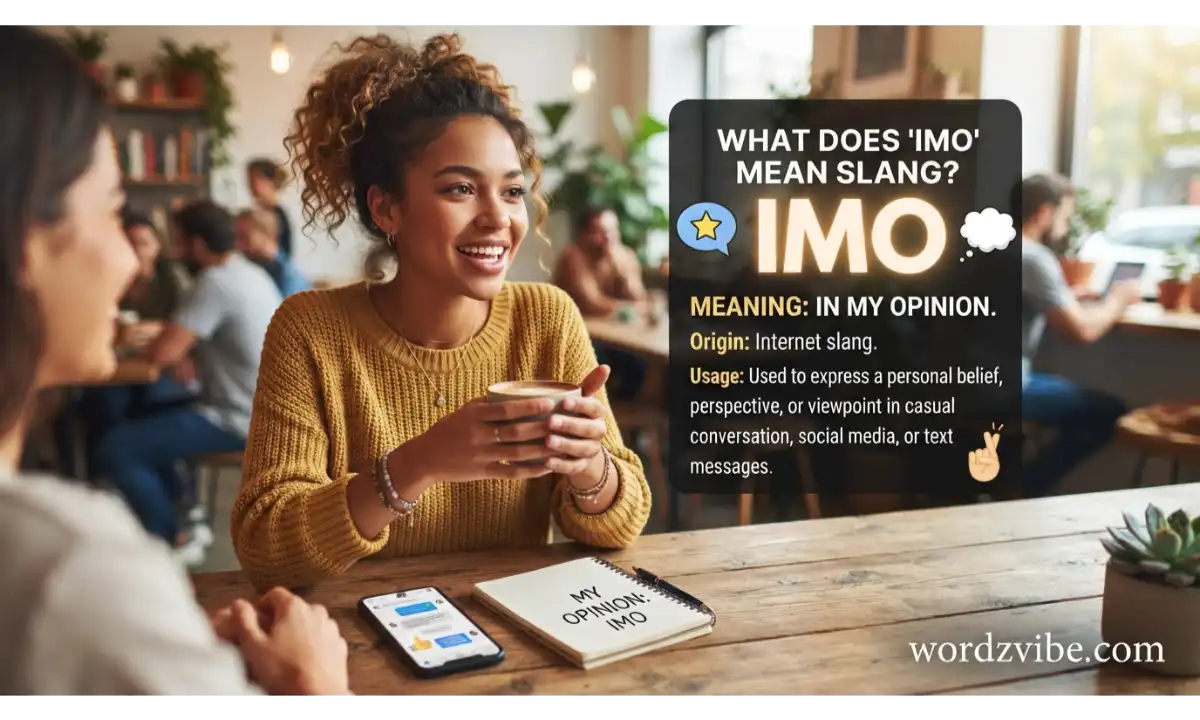
The IMO meaning slang means “in my opinion.” People use this abbreviation in messages, online discussions, and social media to share their personal views without writing the full phrase. For example, “IMO, this movie is overrated” means the person thinks the movie is not as good as others say.
IMO helps make opinions clear and can make a message sound casual rather than formal. You may see it when friends discuss music, compare products, or disagree about a topic. Understanding IMO is simple, but the tone can depend on the conversation. It may introduce a friendly suggestion, a strong opinion, or a disagreement.
Quick Answer
IMO meaning slang “in my opinion.” It is a common informal abbreviation used in texting and online conversations to show that a statement reflects someone’s personal view rather than an established fact. For example, “IMO, this is the best option” signals an individual opinion.
What Does IMO Mean in Text?
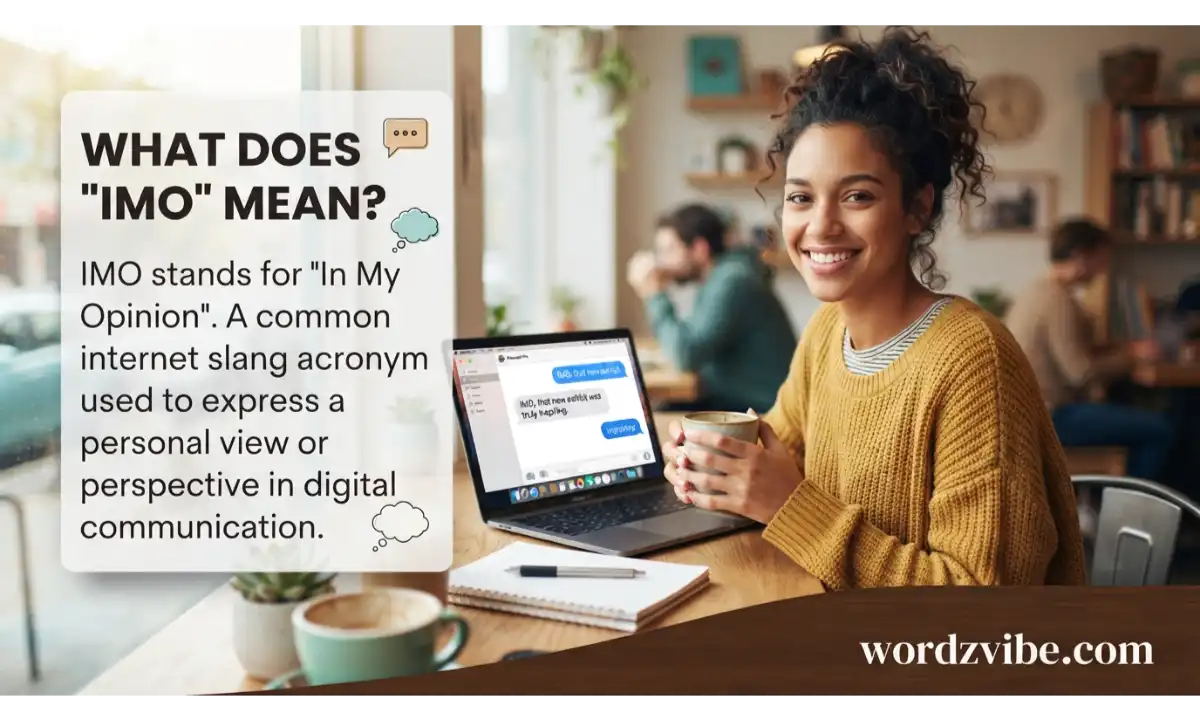
IMO stands for “in my opinion.” People use it before or after a statement to show that they are sharing their own view.
Examples:
- “IMO, pizza is better than burgers.”
- “That was the best episode, IMO.”
- “IMO, we should leave early.”
The abbreviation does not prove that an opinion is correct or incorrect. It simply tells the reader how to interpret the statement.
What Does IMO Stand For?
IMO is formed from the first letters of in my opinion. It is an initialism, which means people generally say the letters individually rather than pronounce them as one word.
You can write it in uppercase as IMO or lowercase as imo in casual messages. Both forms usually carry the same meaning.
How Is IMO Used in Texting and Chat?
IMO is useful when someone wants to share an opinion quickly. It often appears in text messages, group chats, forums, and online discussions.
For example:
Friend A: “Which restaurant should we try?”
Friend B: “IMO, the Italian place is better.”
The reply makes it clear that the recommendation reflects the sender’s preference.
Another example is “IMO, this update made the app harder to use.” Here, the sender presents a personal assessment rather than claiming everyone will agree.
What Tone Does IMO Have?
IMO is generally neutral and informal. It can make a statement sound more personal by showing that the sender is sharing a viewpoint.
- Friendly: “IMO, you’d look great in blue.”
- Helpful: “IMO, the second option is easier.”
- Critical: “IMO, the ending was disappointing.”
- Disagreeing: “IMO, that isn’t the best approach.”
IMO does not automatically make a message polite. The words around it still determine whether the statement sounds respectful, blunt, or dismissive.
IMO vs. IMHO: What Is the Difference?
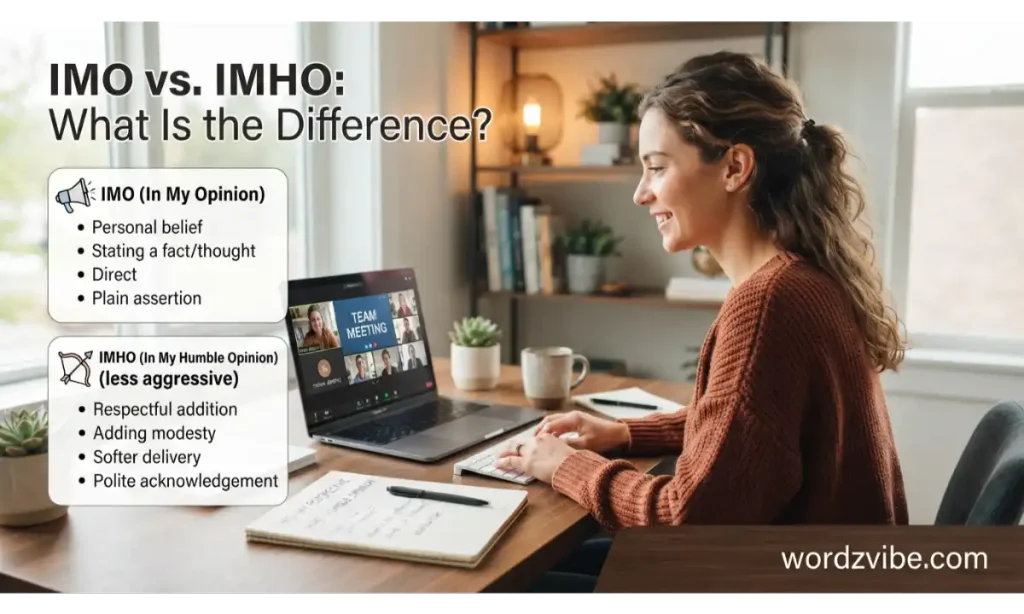
IMO and IMHO are closely related abbreviations, but they include slightly different wording.
| Abbreviation | Full form | Meaning |
|---|---|---|
| IMO | In my opinion | Shares a personal view |
| IMHO | In my humble opinion | Shares a view with a modest or softened tone |
For example, “IMO, this plan will work” states an opinion directly. “IMHO, this plan could work better” may sound more modest, although the actual tone depends on the speaker and context.
Both are informal and commonly understood in online communication.
Is IMO Slang or an Acronym?
IMO is an informal initialism rather than traditional slang with a hidden or unusual meaning. It shortens a familiar phrase to make digital communication quicker.
People use it in everyday conversations, comments, discussion boards, and social media posts. It is widely understandable in English-language online communication, but it may be unfamiliar to readers who do not regularly use internet abbreviations.
In formal writing, spelling out “in my opinion” is often clearer.
Can IMO Sound Rude or Passive-Aggressive?
IMO is not rude by itself. However, a person can use it before a harsh criticism or disagreement.
For example, “IMO, you completely misunderstood the question” may sound blunt because of the criticism, not because of the abbreviation.
Compare that with “IMO, we could explain this more clearly.” The second statement presents feedback in a more constructive way.
Consider the complete message, the relationship between the speakers, and the conversation’s tone before deciding how the abbreviation was intended.
How Should You Reply to IMO?
Your response depends on whether you agree with the opinion or want to discuss it.
- If you agree: “IMO, you’re right.”
- If you disagree politely: “I see your point, but I think differently.”
- If you want an explanation: “What makes you think that?”
- If you want to share your view: “Fair point. IMO, the other option is better.”
You do not need to reply to IMO itself. Respond to the actual opinion the person has shared.
Is IMO Appropriate in Professional Communication?
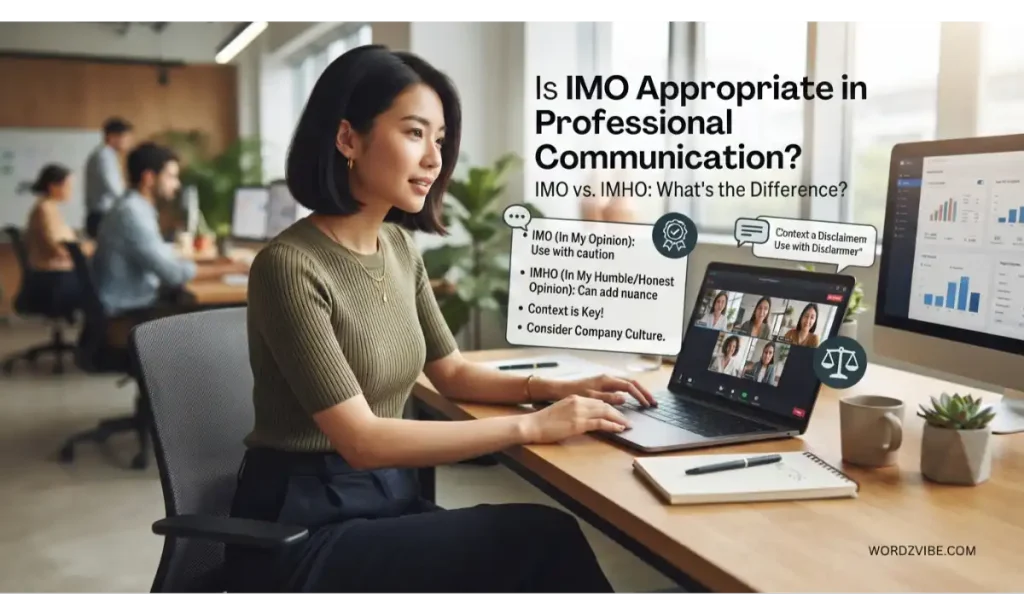
IMO can work in relaxed workplace chats when colleagues use informal language. However, in formal reports, business proposals, academic writing, or official emails, writing “in my opinion” or stating the reasoning directly is usually more suitable.
For example, instead of writing “IMO, we should change the schedule,” you could write, “I recommend changing the schedule because it gives the team more preparation time.”
The second version makes the recommendation clearer and explains its reasoning.
Frequently Asked Questions
1. What is the IMO meaning slang?
IMO means “in my opinion.” People use it in messages and online discussions to introduce or identify a personal viewpoint.
2. Does IMO mean the same thing as IMHO?
They are similar, but IMHO stands for “in my humble opinion.” IMO is more direct, while IMHO can suggest a more modest tone.
3. Is IMO positive or negative?
IMO is neutral by itself. The opinion that follows it determines whether the overall message sounds positive, negative, friendly, or critical.
4. Should IMO have capital letters?
IMO is commonly written in uppercase or lowercase in casual messages. Both forms usually mean “in my opinion.”
5. Can I use IMO in a formal email?
You can use it in informal workplace messages, but spelling out “in my opinion” is generally clearer in formal emails and professional documents.
Final Thoughts
The IMO meaning in text is “in my opinion.” It helps people share personal views in messages, chats, and online discussions without writing the entire phrase. IMO is generally neutral, but the surrounding words determine the message’s tone.
When you see IMO, treat the statement as the sender’s viewpoint rather than an unquestionable fact. In formal communication, writing out the phrase can make your meaning clearer.

“My name is Ali Sarfraz, Senior Content Strategist & Author at WordzVibe. Holding a Master’s degree in English Linguistics with over 6 years of dedicated research in digital communication, I specialize in decoding viral internet slang, trending acronyms, and modern word meanings. Every term I define undergoes a multi-step fact-checking process to ensure absolute precision, linguistic accuracy, and trust for our readers.”