


Have you ever seen someone write “FAFO” in a comment, text message, or heated online discussion? FAFO stands for “F around and find out,” a blunt slang expression warning that actions can lead to consequences.
The phrase is often used when someone believes a person is about to learn a lesson by taking a risk, crossing a boundary, or provoking someone.
Depending on the situation, FAFO can sound funny, confident, threatening, or confrontational. It is not usually a polite expression, so understanding the context matters before using it yourself.
Quick Answer
FAFO slang meaning is “F around and find out.” It warns that someone may face the consequences of their actions. The phrase contains an implied profanity, so it can sound aggressive, playful, or defiant depending on the conversation, the relationship between the people, and the situation.
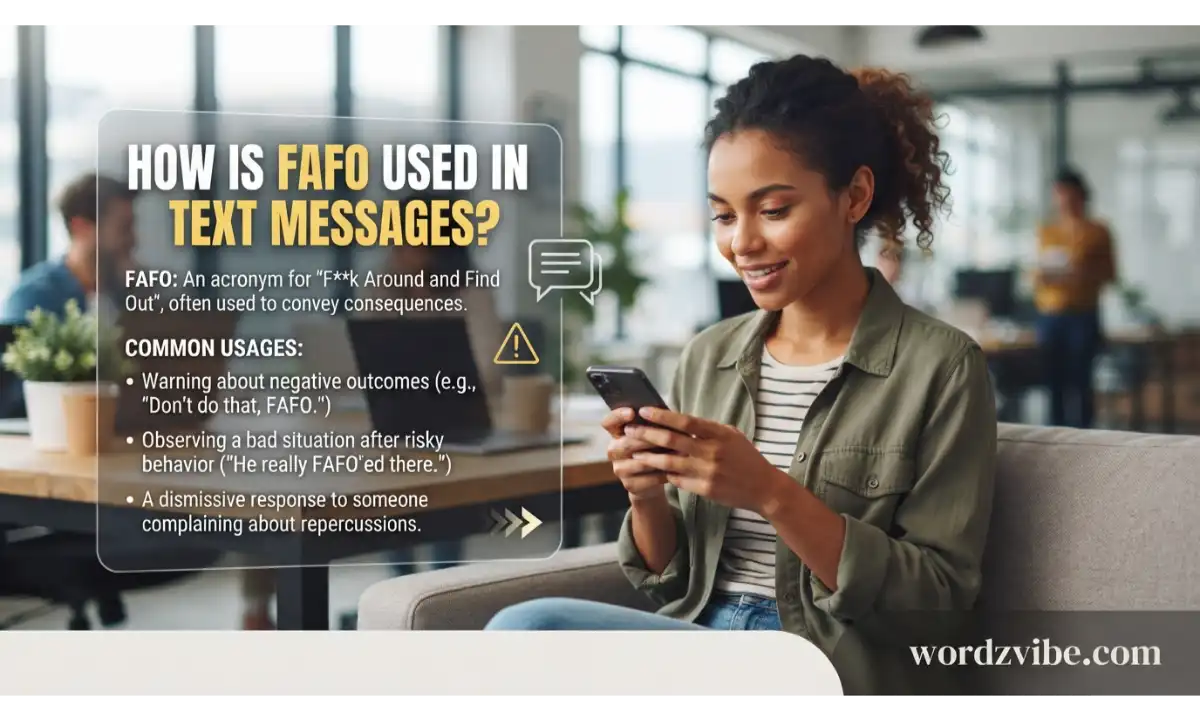
How Is FAFO Used in Text Messages?
People use FAFO in messages to warn someone, react to a bad decision, or suggest that a person has brought trouble upon themselves. It can appear before an outcome as a warning or afterward as a reaction.
Here are a few realistic examples:
Warning a friend
“Keep ignoring the rules and you’ll FAFO.”
The sender is warning that ignoring the rules could lead to consequences.
Reacting to a poor decision
“He touched the hot pan after I told him not to. FAFO.”
The speaker suggests that the person learned from the result of their own choice.
Joking with friends
“You challenged your little sister to a race and lost? FAFO 😂”
Here, the phrase is teasing rather than a serious threat.
Setting a boundary
“Don’t keep disrespecting me. FAFO.”
This sounds much more confrontational. Depending on the circumstances, it could be perceived as a threat, so take the surrounding situation seriously.
What Does FAFO Say About Someone’s Tone?
FAFO carries a blunt message, but the tone can vary.
| Tone | Example | What it suggests |
|---|---|---|
| Funny | “You ate the whole pizza and now you feel sick. FAFO 😂” | Playful teasing |
| Sarcastic | “You ignored every warning. FAFO.” | An “I told you so” reaction |
| Cautionary | “Keep driving that fast and you’ll FAFO.” | A warning about consequences |
| Defiant | “Try to push me around and FAFO.” | A strong response to provocation |
| Aggressive | “Come near me again. FAFO.” | Potentially threatening language |
Do not judge the tone from the abbreviation alone. A laughing emoji and a harmless situation can make it playful, while a personal dispute can make it intimidating.
Is FAFO Considered Rude or Offensive?
Yes, FAFO is generally considered vulgar slang because its original wording contains the F-word. Some people replace that word with “fool” to make the phrase more suitable for polite settings, but the original expression remains the more direct interpretation.
Among friends, it may be used as a joke or a cheeky reaction to a mistake. In a workplace, school assignment, formal email, or serious disagreement, it can sound disrespectful or hostile.
If you want to express the same idea without profanity, try one of these alternatives:
- Actions have consequences.
- Don’t push your luck.
- You may learn the hard way.
- You were warned.
- Every choice has a result.
These alternatives communicate a similar message without the same level of aggression.
Where Did FAFO Come From?
The exact origin of FAFO as an abbreviation is uncertain. The underlying expression existed before its more recent visibility on social media, and language references connect it with African American English. An early online record appeared in 2007, but that does not establish who first coined the phrase.
The abbreviation later became recognizable in online discussions, memes, and public commentary. Its short form makes it useful when someone wants to express a warning or comment on consequences without writing the full phrase.
It is best to distinguish the phrase’s documented history from stories about a single inventor or a precise starting date. There is not enough reliable evidence to confidently credit one person with creating FAFO.

How Do You Reply When Someone Says FAFO?
Your response should depend on whether the sender is joking, warning you, or expressing anger.
- If they’re joking: “Lesson learned 😂”
- If they’re teasing you: “I took the risk, and now I know.”
- If they’re warning you: “I understand. I’ll be careful.”
- If you’re unsure what they mean: “What do you mean by that?”
- If it feels threatening: Avoid escalating the exchange. Set a clear boundary and seek help if you believe you may be in danger.
You do not have to respond with slang just because someone used it. A calm, direct reply is often the better choice when the situation feels serious.
Frequently Asked Questions
1. What is the FAFO slang meaning?
FAFO stands for “F around and find out,” with the F-word usually understood as profanity. It means someone may experience the consequences of risky, reckless, or provocative behavior.
2. What does FAFO slan meaning in text messages?
In text messages, FAFO is used as a warning or reaction to someone’s actions. It can be humorous between friends or serious when the conversation involves conflict.
3. Is FAFO a threat?
Not always. FAFO can be a joke, a general warning, or a comment about consequences, but in a hostile exchange it may sound threatening. The surrounding words and situation matter.
4. Is FAFO the same as “actions have consequences”?
The basic idea is similar, but FAFO is more vulgar and confrontational. “Actions have consequences” is a more neutral alternative suitable for formal or polite conversations.
5. How do you pronounce FAFO?
FAFO is commonly pronounced “fah-foh,” although some people say each letter separately. Because it is often used in writing, pronunciation can vary.
Final Thoughts
The FAFO slang meaning is “F around and find out.” It expresses the idea that risky or provocative actions can lead to consequences. People may use it to joke about a mistake, warn someone against crossing a boundary, or react when a person faces the results of their choices.
Remember that FAFO contains implied profanity and can sound aggressive in the wrong situation. Read the context before interpreting it, and choose a milder phrase when a respectful tone matters.

My name is Muhammad Waseem, author at WordzVibe. With a Master’s degree in English and over 6 years of linguistic experience, I break down modern digital terms, viral slang, and word meanings into simple language. Every definition on this site is personally researched, written, and verified by me to ensure full accuracy and reliability.