

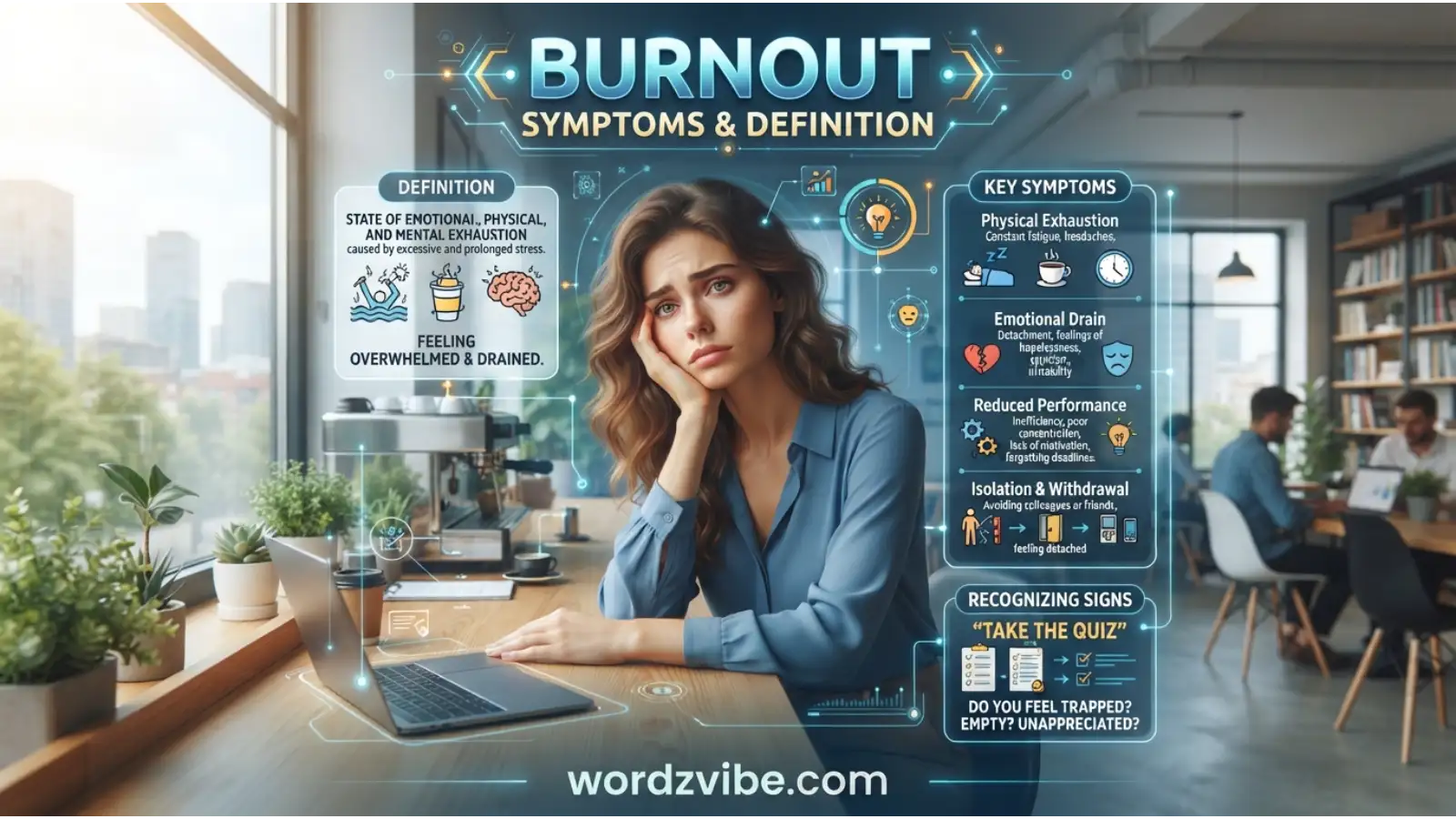
Burnout can be difficult to recognize because it often starts as ordinary tiredness. I might notice that I am exhausted after work, less interested in tasks I once cared about, or simply counting the hours until the day ends.
The important difference is that burnout is more than having a busy week or feeling tired after a demanding day.The World Health Organization defines burnout as a syndrome resulting from chronic workplace stress that has not been successfully managed.
It has three main dimensions: exhaustion, increased mental distance or cynicism toward work, and reduced professional efficacy. WHO classifies burnout as an occupational phenomenon rather than a medical condition.
This distinction matters because burnout symptoms can overlap with other health concerns. Understanding the definition, warning signs, context, and differences from ordinary stress can help a person decide when it is time to make changes or seek professional support.
Quick Answer
Burnout symptoms and definition refer to a pattern associated with prolonged, poorly managed workplace stress. Common signs include exhaustion, detachment or cynicism toward work, difficulty concentrating, reduced satisfaction, sleep changes, and feeling less effective.
What Is Burnout?
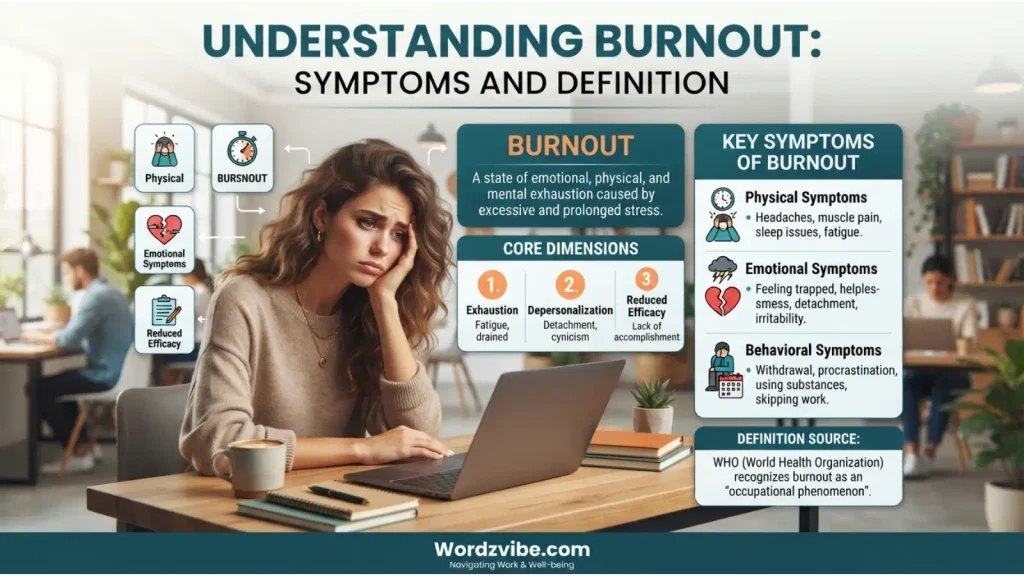
Burnout is a response to chronic workplace stress rather than simply being tired. WHO identifies exhaustion, mental distance or negative feelings toward work, and reduced professional efficacy as its three core dimensions.
What Does the Definition of Burnout Mean?
In simple language, burnout means that ongoing work-related pressure has become difficult to manage. It can affect energy, attitude toward work, and confidence in your ability to perform your role.
What Are the Main Burnout Symptoms?
Common signs include persistent exhaustion, difficulty starting work, poor concentration, reduced satisfaction, detachment from colleagues, impatience, self-doubt, and changes in sleep. Physical complaints such as headaches or stomach problems can also occur.
Is Exhaustion the Same as Burnout?
No. Exhaustion is one part of burnout, but it does not automatically mean someone is experiencing burnout. A person may be very tired while still feeling positive about their work and confident in their abilities.
How Does Burnout Affect Your Attitude Toward Work?
A person may become emotionally distant from work or increasingly cynical about it. Tasks that once felt meaningful can start to feel pointless, frustrating, or difficult to care about.
Can Burnout Affect Job Performance?
Yes. Reduced professional efficacy is one of the three dimensions recognized by WHO. A person may begin doubting their abilities, struggle to concentrate, or feel that their work is no longer good enough.
Can Burnout Cause Sleep Changes?
Sleep changes can occur alongside job burnout. Mayo Clinic lists changes in sleep habits among possible signs and recommends professional guidance when symptoms are concerning or persistent.
What Does Burnout Feel Like Emotionally?
Emotionally, burnout may feel like being drained, detached, frustrated, or increasingly negative about work. Some people also experience reduced satisfaction or a sense that their efforts no longer matter.
Can Burnout Affect Concentration?
Yes. Difficulty focusing is one of the symptoms Mayo Clinic lists when discussing job burnout. A person may find ordinary tasks harder to start, organize, or complete.
What Causes Workplace Burnout?
Potential workplace contributors include excessive workloads, limited support, little control over work decisions, insufficient recognition, and unhealthy or unfair work environments. APA notes that burnout should not be viewed only as an individual problem because workplace conditions can play an important role.
Is Burnout a Medical Condition?
WHO does not classify burnout as a medical condition. In ICD-11, it is classified as an occupational phenomenon specifically related to chronic workplace stress.
Burnout vs Stress
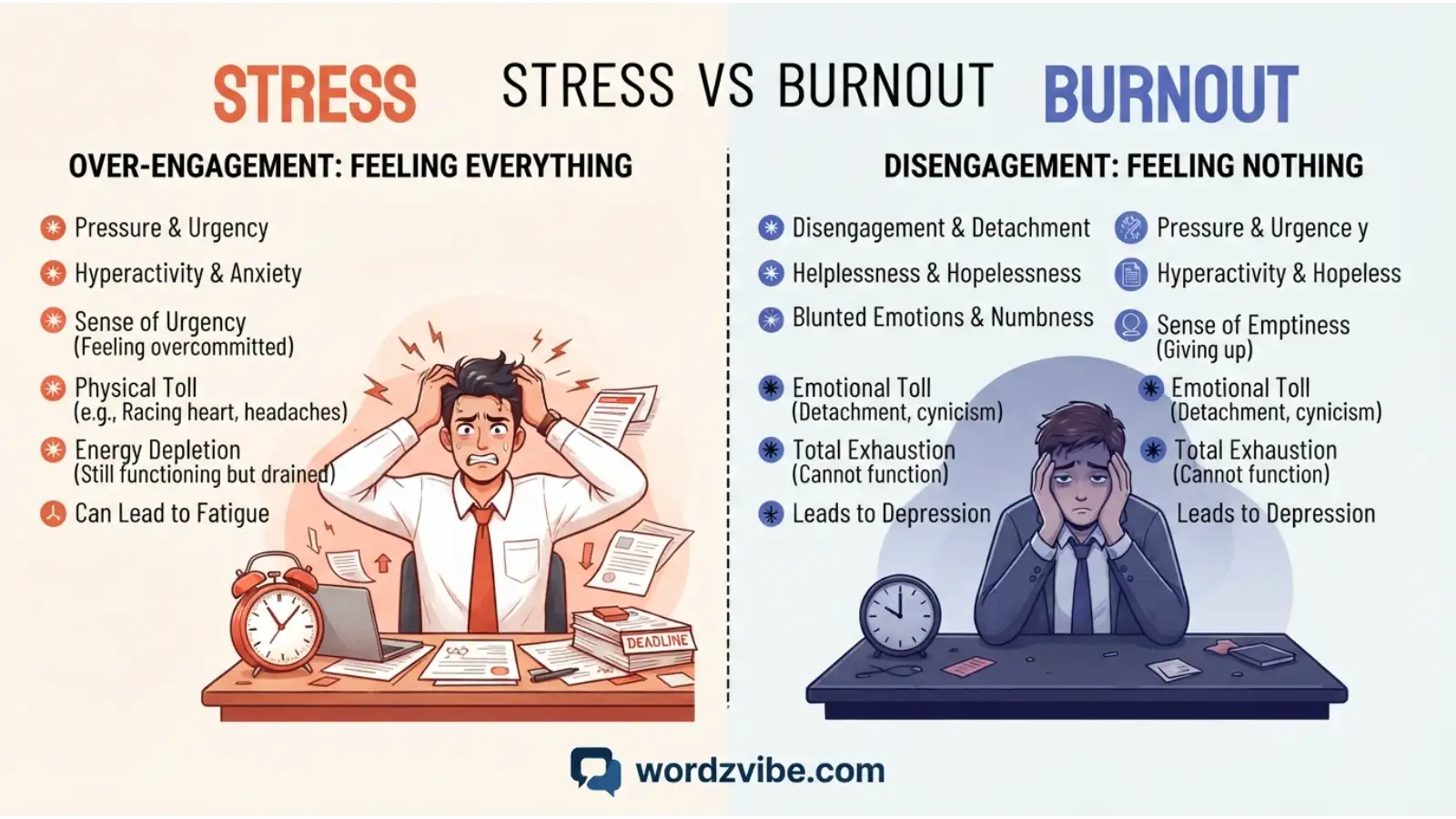
Stress and burnout are related but not identical. Stress can describe a response to demanding circumstances, while burnout involves a broader pattern that includes exhaustion, psychological distance from work, and reduced professional efficacy.
Burnout vs Depression
Burnout and depression can overlap in some symptoms, but they are not the same thing. Mayo Clinic notes that burnout is not a medical diagnosis and that symptoms can also be connected with depression or other health conditions.
How Does Burnout Appear at Work?
Someone experiencing burnout may dread starting work, withdraw from coworkers, lose patience, question the value of their role, or feel unable to perform as effectively as before. These signs become more meaningful when viewed as a continuing pattern rather than one difficult day.
Can Teachers and Other Professionals Experience Burnout?
Yes. Burnout can occur across occupations because the WHO definition concerns chronic workplace stress rather than one particular profession. The important issue is the relationship between ongoing work demands and the person’s ability to manage them.
Is Burnout Appropriate as a Casual Expression?
People often use “burned out” casually to describe being extremely tired or overwhelmed. In professional and health discussions, however, it is useful to distinguish everyday tiredness from the more specific occupational concept recognized by WHO.
How Can I Recognize Burnout Symptoms in Myself?
Look for a continuing combination of exhaustion, increasing distance or negativity toward work, and reduced confidence in your effectiveness. Other warning signs can include concentration problems, low satisfaction, sleep changes, and physical complaints.
What Should You Do If Burnout Symptoms Continue?
Start by taking persistent symptoms seriously rather than treating them as a personal failure. Discuss workload, support, priorities, or working conditions when possible. If symptoms are severe, persistent, or affecting daily functioning, consider speaking with a qualified healthcare or mental health professional.
What Are Some Simple Examples of Burnout?
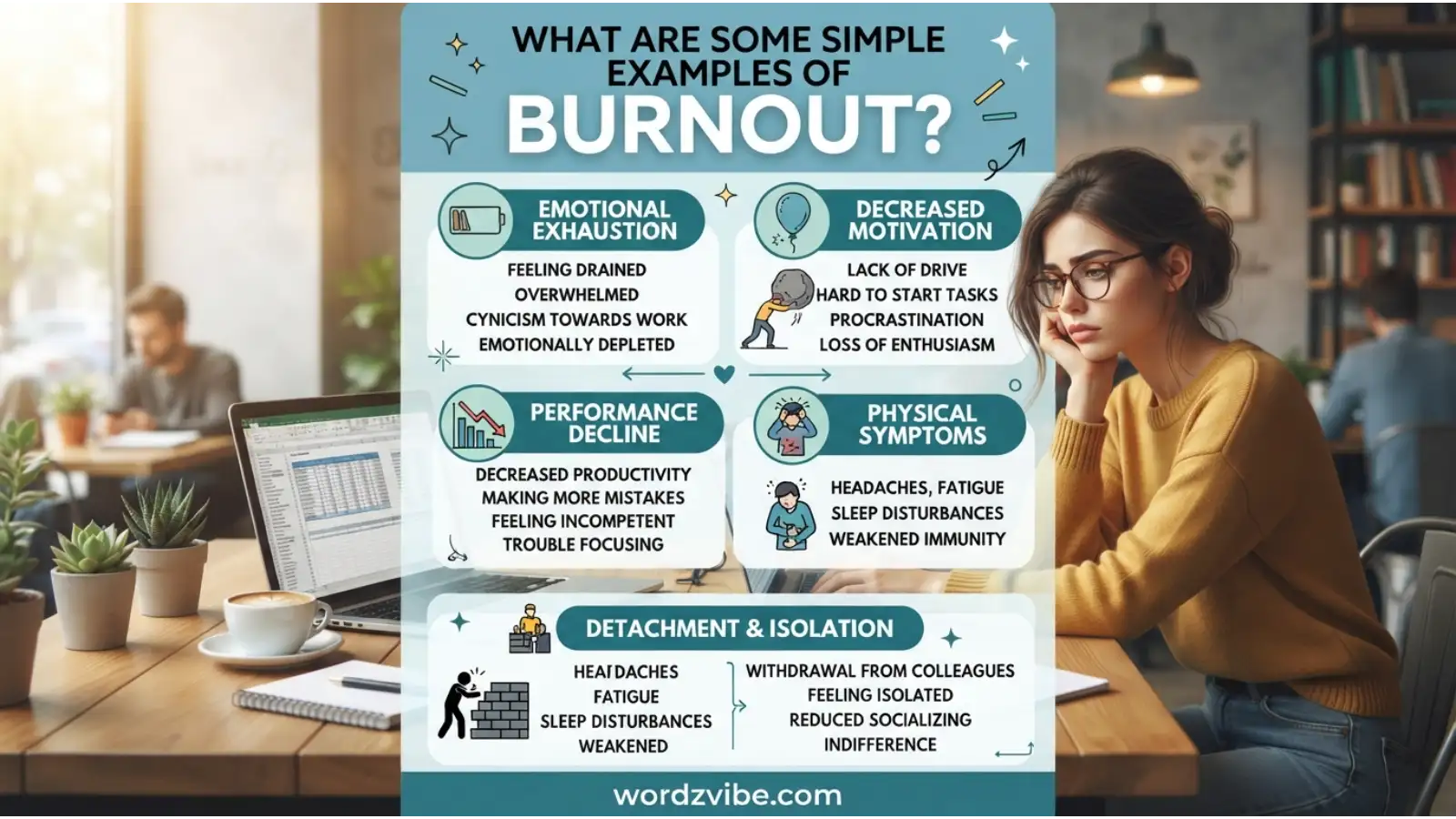
A worker might say, “I have no energy left for this job,” while also feeling detached from coworkers and unsure about their own performance. Another person may still complete tasks but feel increasingly cynical and dissatisfied with the work.
These examples show why exhaustion alone does not fully describe burnout.
How Should Burnout Be Discussed at Work?
Clear language helps. Instead of simply saying, “I’m tired,” you might explain that ongoing workload, limited recovery time, or workplace demands are affecting your energy and ability to work effectively. This makes the conversation more specific and practical.
Why Does Context Matter When Understanding Burnout?
Context is important because the same symptom can have different explanations. Feeling tired after a demanding week does not automatically indicate burnout. A persistent pattern connected to workplace stress provides more meaningful context for understanding the term.
Frequently Asked Questions
1. What is the definition of burnout?
Burnout is an occupational phenomenon associated with chronic workplace stress that has not been successfully managed. WHO describes it through exhaustion, increased mental distance or cynicism toward work, and reduced professional efficacy.
2. What are the most common burnout symptoms?
Common symptoms include exhaustion, difficulty concentrating, reduced satisfaction, detachment from work, impatience, self-doubt, sleep changes, and physical complaints. Symptoms vary between individuals.
3. Is burnout the same as stress?
No. Stress can involve pressure and demands, while burnout is a more specific occupational pattern involving exhaustion, negative or distant feelings toward work, and reduced professional efficacy.
4. Is burnout a mental illness?
WHO classifies burnout as an occupational phenomenon rather than a medical condition. However, symptoms can overlap with other health concerns, so persistent or serious symptoms deserve appropriate professional attention.
5. When should I seek professional help for burnout symptoms?
Consider speaking with a healthcare or mental health professional when symptoms persist, become difficult to manage, or interfere with daily life. Similar symptoms can sometimes occur with depression or other health conditions.
Final Thoughts
I find the clearest way to understand burnout symptoms and definition is to look beyond simple tiredness. Burnout is connected specifically with chronic workplace stress and involves exhaustion, increasing distance or negativity toward work, and reduced professional effectiveness.
The practical takeaway is to notice patterns rather than judge yourself based on one difficult day. If exhaustion and work-related detachment continue, paying attention to the underlying workplace conditions and seeking appropriate support can be an important next step.

“My name is Ali Sarfraz, Senior Content Strategist & Author at WordzVibe.com. Holding a Master’s degree in English Linguistics with over 6 years of dedicated research in digital communication, I specialize in decoding viral internet slang, trending acronyms, and modern word meanings. Every term I define undergoes a multi-step fact-checking process to ensure absolute precision, linguistic accuracy, and trust for our readers.”