

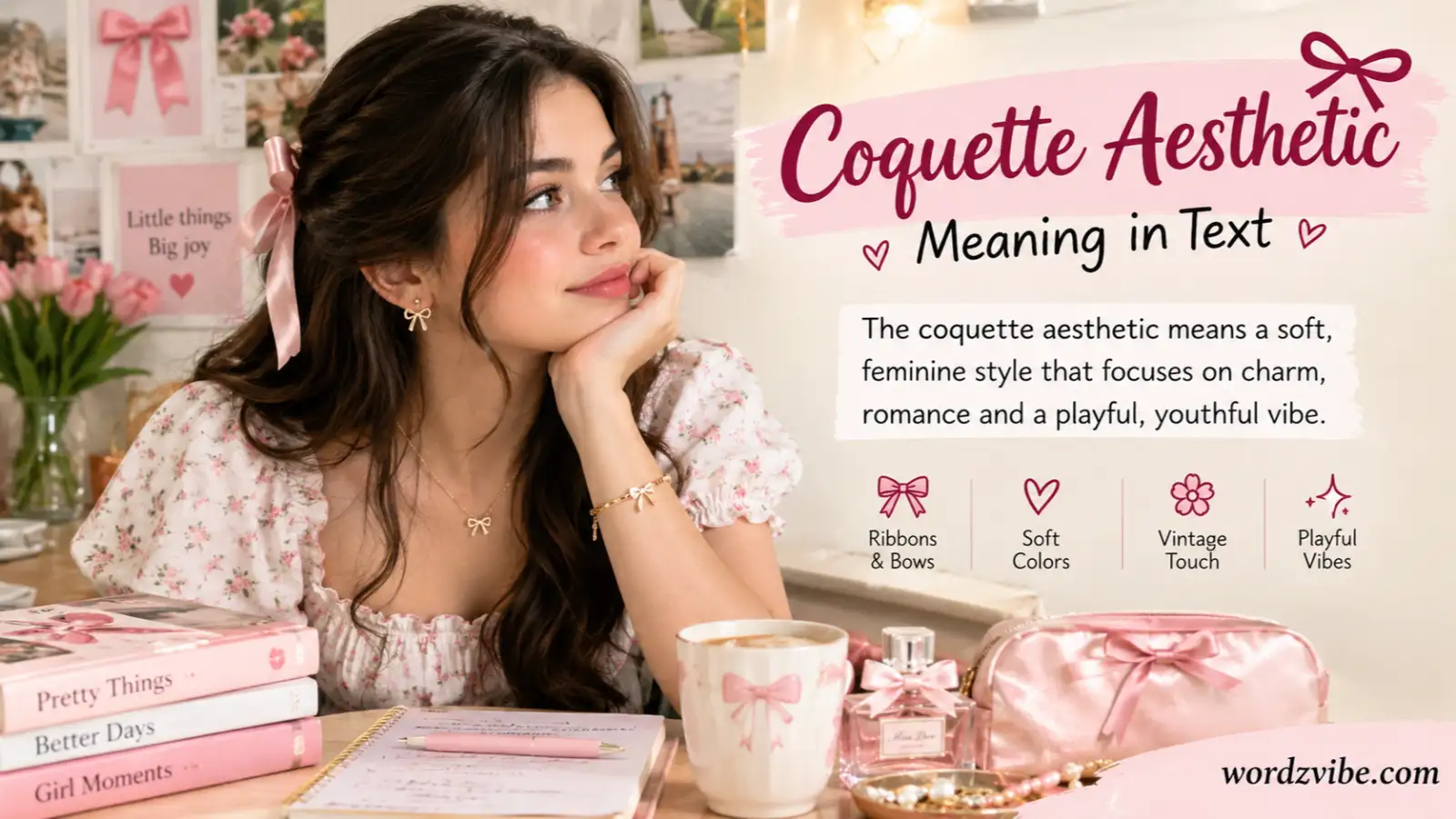
I often see people use coquette aesthetic meaning in text when they want to understand a style, mood, or social-media description rather than the older dictionary meaning of the word.
In everyday online conversations, I use “coquette aesthetic” to describe a soft, feminine, romantic, playful, and slightly flirtatious style often associated with bows, ribbons, lace, pearls, pastel colors, delicate dresses, ballet-inspired details, and carefully styled beauty looks.
The original word coquette has a more specific meaning: it refers to someone who attracts attention in a flirtatious way without necessarily showing serious romantic interest. In internet culture, however, the phrase has expanded into an aesthetic identity that can describe clothing, makeup, photography, room decor, captions, profiles, or an overall mood.
I created this guide because the phrase can sound confusing when someone uses it in a text, comment, caption, or profile. Here, I explain its meaning, tone, pronunciation, origin, examples, and the difference between the word and the modern aesthetic.
Quick Answer
- Coquette aesthetic meaning in text usually describes a soft, feminine, romantic, delicate, playful, and subtly flirtatious style or vibe.
- I associate it with bows, ribbons, lace, pearls, pink or pastel shades, ballet-inspired details, vintage femininity, and romantic styling.
- In a message, “you have a coquette aesthetic” usually means the person thinks your appearance, photos, outfit, or overall style has this feminine and romantic quality.
- The word coquette itself can also mean a person who deliberately attracts attention in a flirtatious but not necessarily serious way.
What Does Coquette Aesthetic Meaning in Text Actually Mean?
When I explain coquette aesthetic meaning in text, I focus on the difference between the individual word and the modern phrase. The dictionary meaning of “coquette” relates to flirtatious behavior, while “coquette aesthetic” describes a broader visual and cultural style. Cambridge defines a coquette as a woman who attracts attention by acting as though she is sexually interested in people in a pleasant but unserious way.
In online communication, I would not automatically interpret the phrase as saying someone is sexually interested in another person. The aesthetic meaning is usually much softer and can simply point to a particular fashion or visual identity.
I commonly see the phrase connected with:
- Bows and ribbons.
- Lace and ruffles.
- Pearls and delicate jewelry.
- Soft pink, white, cream, or pastel colors.
- Ballet flats and ballet-inspired clothing.
- Romantic dresses and skirts.
- Feminine hairstyles.
- Vintage-inspired details.
- Soft makeup and polished beauty looks.
- Playful, romantic, or dreamy photography.
So, if someone writes “Her whole profile has a coquette aesthetic,” I would usually understand that as a comment about her visual style rather than a literal statement about her romantic behavior.
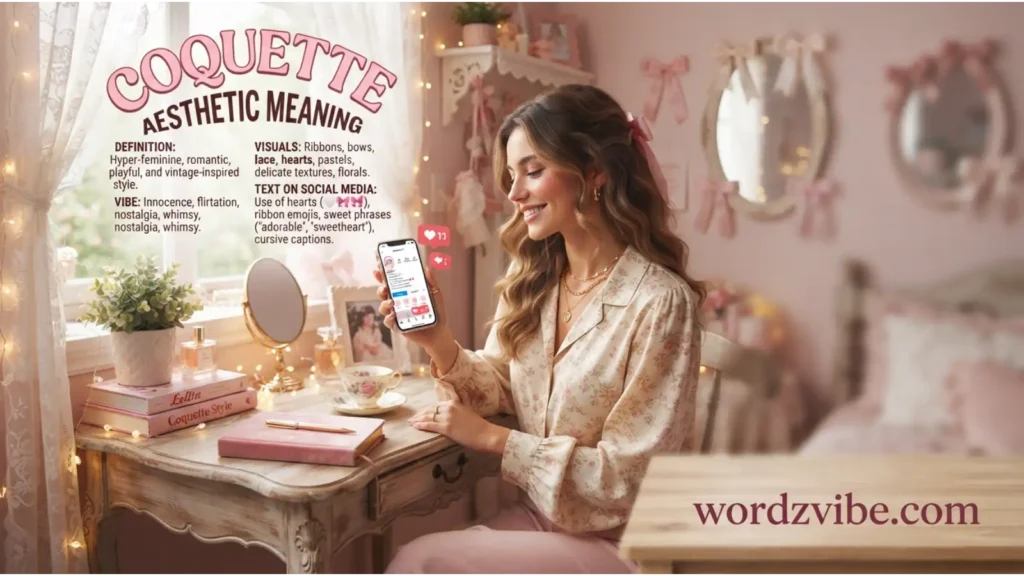
Coquette Aesthetic Meaning in Text on Social Media
I see the phrase used especially often in social-media captions, comments, bios, fashion posts, and aesthetic discussions. On these platforms, people often use “coquette” as a quick label for a recognizable visual mood.
The modern aesthetic became strongly associated with bows, hyper-feminine styling, lace, pearls, delicate clothing, and romantic imagery. Vogue has described the trend as a modern aesthetic influenced by earlier feminine styles, with elements such as bows, pink details, lace, corsets, and vintage references.
For example, I might interpret these messages like this:
- “Your outfit is so coquette.”
I read this as a compliment about a feminine, romantic, delicate outfit. - “I’m going for a coquette aesthetic.”
I understand this as wanting to create a particular soft and feminine visual style. - “Her room is very coquette.”
This usually refers to decor featuring romantic, delicate, feminine, or vintage-inspired details. - “This picture gives coquette vibes.”
This suggests that the image creates a soft, romantic, playful, or feminine impression.
The exact meaning still depends on the person and context, so I would avoid treating every use as having exactly the same definition.
How to Pronounce Coquette Aesthetic
I pronounce the key phrase by giving special attention to the first word, coquette. Cambridge lists the US pronunciation of “coquette” as /koʊˈket/ and the UK pronunciation as /kɒkˈet/.
The word has two syllables, with the main stress on the second syllable. When I say the complete phrase naturally, I keep the pronunciation smooth rather than strongly separating each word.
What Does Coquette Mean by Itself?
I think this distinction is important because coquette existed long before the current internet aesthetic. The word traditionally describes a woman who behaves flirtatiously to attract attention without necessarily having serious romantic intentions.
Cambridge labels the noun as literary and gives “flirt” as a synonym, while also noting that the word can carry a particular behavioral meaning.
The related adjective coquettish describes behavior intended to attract attention through pleasant but unserious sexual or romantic interest.
In simple language, I would explain the traditional sense as:
- Flirtatious.
- Playfully attractive.
- Attention-seeking in a romantic way.
- Teasing without necessarily being serious.
- Deliberately charming.
However, I would not use the traditional definition to explain every modern social-media use. Today, “coquette” can function as an aesthetic label even when no flirting is involved.
Coquette Aesthetic Meaning and Its Main Characteristics
When I identify a coquette aesthetic, I usually look for a combination of visual details rather than one specific item. A single bow does not automatically make an outfit coquette, just as wearing pink alone does not define the entire aesthetic.
Common characteristics include:
- Bows: Hair bows, clothing bows, shoe details, and decorative ribbons are among the most recognizable elements.
- Lace: Delicate lace can create the soft and romantic appearance associated with the style.
- Pearls: Pearl jewelry and accessories can add a classic feminine touch.
- Pastel colors: Pink, cream, white, blush, and other soft shades often appear.
- Romantic clothing: Dresses, skirts, fitted tops, cardigans, and delicate fabrics can contribute to the look.
- Ballet references: Ballet flats, ribbons, and graceful styling can overlap with ballet-inspired aesthetics.
- Vintage details: Some versions borrow visual ideas from older romantic and feminine fashion.
- Soft beauty: Gentle makeup, polished hair, and delicate accessories can reinforce the overall mood.
Vogue has specifically connected the modern trend with bows, ballet flats, ruffles, lace, pink tones, and other highly feminine details.
The Tone of Coquette Aesthetic in a Text
I pay close attention to tone because the same word can feel different depending on who sends it and why. When someone says “You look so coquette,” the tone is often appreciative, playful, fashionable, or complimentary.
Still, the phrase can sometimes be used humorously or ironically. Internet aesthetics often become memes, and Vogue documented examples of people applying tiny bows to unexpected objects as part of the coquette trend.
Here is how I usually read the tone:
| Context | Likely Tone | Meaning |
|---|---|---|
| Fashion comment | Complimentary | Feminine and stylish |
| Instagram caption | Aesthetic | Romantic or delicate visual mood |
| TikTok comment | Playful | Trendy or visually feminine |
| Dating conversation | Potentially flirtatious | Charming or intentionally feminine |
| Profile description | Identity/style | Person identifies with the aesthetic |
| Joke or meme | Ironic | Exaggerated feminine styling |
I always check the surrounding message before deciding which meaning the sender intended.
Coquette Aesthetic vs Coquette Personality
I find this comparison especially useful because people sometimes confuse a fashion aesthetic with a personality trait. The two can overlap, but they do not automatically mean the same thing.
| Feature | Coquette Aesthetic | Coquette Personality |
|---|---|---|
| Definition | A visual or cultural style | A flirtatious behavioral style |
| Tone | Soft, romantic, feminine, playful | Charming, teasing, flirtatious |
| Best Use Case | Fashion, photos, decor, profiles | Describing personal behavior |
| Key Difference | Focuses on appearance and mood | Focuses on interaction and behavior |
For example, I could describe a person as having a coquette aesthetic because she wears bows, lace, pearls, and romantic dresses. That description does not tell me whether she behaves flirtatiously with other people.
Likewise, someone could behave in a coquettish way without dressing in the modern coquette style. Keeping these meanings separate makes the language much clearer.
Coquette Aesthetic vs Girly Aesthetic
I often see “coquette” and “girly” used as if they were identical, but I would not treat them as perfect synonyms. A girly aesthetic can cover many feminine styles, while coquette usually suggests a more specific romantic, delicate, flirtatious, or vintage-inspired direction.
A girly look might include bright colors, playful accessories, cartoon prints, cute bags, or youthful styling. A coquette look tends to emphasize bows, lace, ribbons, pearls, romantic silhouettes, and delicate details.
The difference is mainly about the visual mood. I use “girly” as a broader description and “coquette” as a more specific aesthetic label.
Coquette Aesthetic Origin and Etymology
I always separate the history of the word from the history of the internet trend. Coquette is a French word that entered English with a meaning connected to a flirtatious woman. Cambridge records the modern English noun and its pronunciation, while the adjective “coquettish” carries the related idea of flirtatious behavior.
The modern coquette aesthetic developed much later as part of online fashion and aesthetic culture. Vogue reported that the aesthetic emerged strongly around 2020 and later grew through social platforms, with bows, ballet-inspired details, lace, and hyper-feminine styling becoming recognizable features.
Vogue also described coquette as one of the internet aesthetics that became especially visible in 2023, with roots and visual connections to older fashion traditions.
So, I would summarize the history this way:
Traditional word → flirtatious behavior → modern internet aesthetic → broader visual style.
How I Understand Coquette Aesthetic in Real Communication
When I edit or interpret online language, I always consider the speaker, platform, relationship, and surrounding words. “Coquette” in a fashion conversation usually points toward appearance, while the same word in a relationship conversation can carry a stronger flirtatious meaning.
For example:
Friend: “Your new dress is so coquette.”
I would interpret this as a fashion compliment.
Friend: “Your entire room looks coquette.”
I would interpret this as a comment about decor and visual style.
Person you are dating: “You’re being so coquette tonight.”
I would look at the surrounding conversation because this could refer to flirtatious behavior rather than clothing.
This context-based approach prevents me from assuming that every use of “coquette” has a romantic or sexual meaning.
Coquette Aesthetic Examples in Text
I use these examples to show how the phrase can naturally appear in everyday digital communication.
- “I’m obsessed with your coquette aesthetic.”
The sender likes the person’s romantic and feminine visual style. - “Her Pinterest board is pure coquette.”
The board contains imagery associated with the aesthetic. - “I want a coquette bedroom.”
The person wants romantic, delicate, feminine decor. - “That bow makes the outfit feel more coquette.”
The bow adds a recognizable element of the aesthetic. - “She has such a coquette vibe.”
The sender sees a soft, feminine, romantic, or playful quality. - “I’m trying the coquette aesthetic this summer.”
The person plans to experiment with the fashion or visual style. - “This photo is giving coquette.”
The photo creates a romantic or delicate visual impression. - “Your makeup looks very coquette today.”
The sender is describing the makeup as soft, feminine, or romantic.
Can Coquette Aesthetic Be Used in Professional Communication?
I would generally avoid using coquette aesthetic in a formal workplace email unless the subject itself is fashion, branding, design, beauty, or social-media culture. The phrase is informal and culturally specific, so a professional audience may not immediately understand the intended meaning.
For example, instead of writing:
“Our new campaign has a coquette aesthetic.”
I might write:
“Our new campaign uses a soft, romantic, feminine visual style with bows, pastel colors, and delicate details.”
In a fashion or marketing workplace, however, the term can be useful because the audience may already understand internet aesthetics and trend terminology.
I see the phrase as perfectly suitable for creative briefs, fashion discussions, social-media planning, and trend reports when the audience knows the vocabulary.
Common Misunderstandings About Coquette Aesthetic Meaning in Text
I think the biggest misunderstanding is assuming that “coquette” always means “flirty girl.” That interpretation comes from the traditional meaning of the word, but modern internet usage often refers simply to an aesthetic.
I also would not assume that wearing a bow automatically means someone identifies as coquette. The aesthetic is usually created through a combination of styling choices, mood, presentation, and visual references.
Another common mistake is treating “coquette” and “feminine” as exact synonyms. I see coquette as one particular expression of femininity rather than a replacement for the entire concept.
Finally, I would avoid assuming romantic or sexual intent unless the context actually supports it. Online aesthetic language often turns older words into broader style labels.
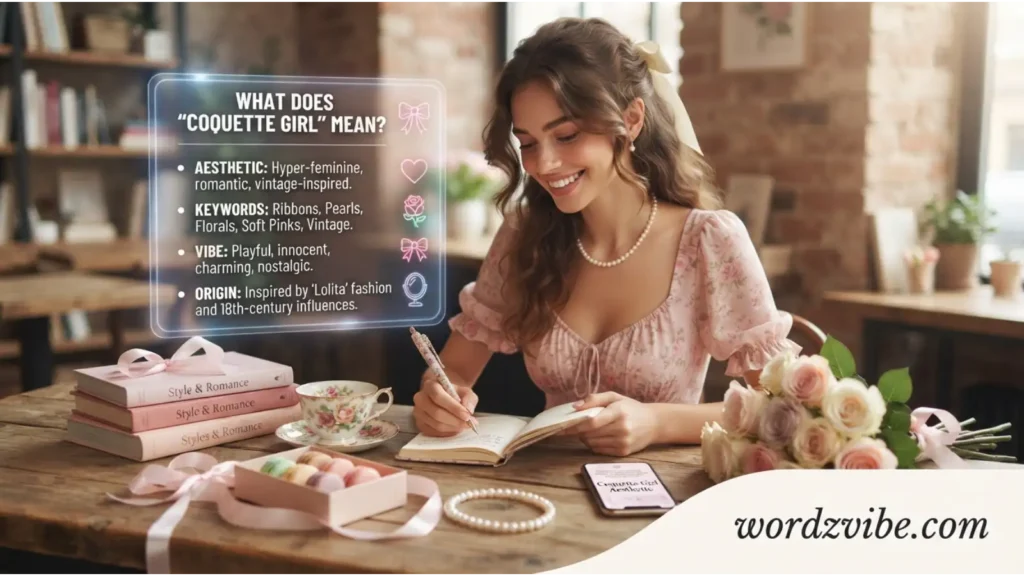
What Does “Coquette Girl” Mean in Text?
When I see “coquette girl” in a social-media post, I usually interpret it as a girl or woman whose appearance or personal style follows the coquette aesthetic. The phrase can suggest bows, lace, pearls, romantic clothing, soft colors, feminine beauty, and a delicate visual presentation.
Depending on context, however, it can also connect to the traditional idea of a flirtatious woman. I therefore look at the surrounding words before deciding which meaning is intended.
For example:
“She’s such a coquette girl; look at her bows and lace.”
Here, I would read it primarily as an aesthetic description.
“She was acting like a coquette.”
Here, I would read it more as a description of flirtatious behavior.
The noun and the aesthetic label are related, but they are not interchangeable in every sentence.
Is Coquette Aesthetic Always Pink and Feminine?
I would say pink is common, but it is not a strict requirement. The modern aesthetic is strongly associated with soft feminine visuals, yet people can create a coquette-inspired look using cream, white, black, red, burgundy, neutral shades, or vintage colors.
The defining idea is the overall combination of delicate, romantic, playful, and feminine elements. Vogue has also described the aesthetic as adaptable, with its recognizable bows and romantic details appearing in different styling approaches.
For me, the most useful way to identify it is to look at the complete visual language rather than one color.
People Also Ask About Coquette Aesthetic Meaning in Text
1. What does coquette aesthetic mean in text?
I use coquette aesthetic meaning in text to describe a soft, romantic, feminine, playful, and sometimes subtly flirtatious visual style. It commonly includes bows, lace, pearls, ribbons, pastel colors, delicate clothing, and vintage-inspired details.
2. What does coquette mean in texting?
In texting, “coquette” can describe someone as flirtatious or charming, but it can also refer to the modern coquette aesthetic. I determine the intended meaning from the surrounding conversation.
3. Is coquette a compliment?
It can be a compliment when someone uses it to praise your outfit, photos, makeup, room, or overall aesthetic. I would still consider the context because the traditional word can also describe flirtatious behavior.
4. What does coquette girl mean?
I usually understand “coquette girl” as a girl or woman who embraces the coquette aesthetic through feminine, romantic, delicate, or playful styling. In some contexts, it can also refer to flirtatious behavior.
5. Is coquette the same as feminine?
I would not treat them as exact synonyms. Feminine is a much broader concept, while coquette usually refers to a particular romantic, delicate, playful, and sometimes flirtatious expression of femininity.
Final Thoughts
I see coquette aesthetic meaning in text as a good example of how internet language can expand an older word into a much broader cultural label. The traditional word points toward flirtatious behavior, while the modern aesthetic usually describes a visual style built around femininity, romance, delicacy, bows, lace, ribbons, pearls, and playful charm.
For me, context remains the most important part of understanding the phrase. If I see “coquette” under a fashion photo, I think aesthetic; if I see it in a conversation about someone’s behavior, I pay more attention to the traditional flirtatious meaning. Understanding that difference helps us read modern texts more accurately without forcing one definition onto every situation.

My name is Muhammad Waseem, author at WordzVibe.com. With a Master’s degree in English and over 6 years of linguistic experience, I break down modern digital terms, viral slang, and word meanings into simple language. Every definition on this site is personally researched, written, and verified by me to ensure full accuracy and reliability.
2 thoughts on “What Does Coquette Aesthetic Meaning in Text?”