


I often see short forms like WK in messages, and I know how confusing they can feel when the surrounding conversation gives little context. When I look at wk meaning in text, I usually find that WK can mean week, especially when people are talking about schedules, deadlines, plans, or time.
I also see WK used for other meanings in specific conversations, so I never recommend assuming one definition immediately. In casual texting, the intended meaning depends on the words around it, the platform, and the relationship between the people chatting.
In this guide, I explain the most common meaning of WK, how I identify it from context, where I would use it, and where I would avoid it. If you have received a message containing WK today, my goal is to help you understand it quickly and reply with confidence.
Quick Answer:
- I most commonly use WK as a short form of week in casual messages.
- I interpret it from context, because WK can have different meanings in different situations.
- I recommend writing week instead of WK in formal emails, academic work, and professional documents.
What Does WK Mean in Text?
When I see WK in a text message, I usually understand it as week. People often shorten the word to save time when discussing appointments, deadlines, vacations, work schedules, or upcoming plans.
For example, I might receive a message saying, “See you next wk,” and I would naturally read it as “See you next week.”
I commonly see WK used in short phrases such as:
- Next wk means next week.
- This wk means this week.
- Last wk means last week.
- 2 wks means two weeks.
- Every wk means every week.
I consider WK a casual abbreviation rather than a standard choice for polished writing.

WK Meaning in Text and Everyday Conversations
When I explain wk meaning in text, I focus strongly on context because abbreviations do not always have one universal meaning. In everyday texting, the surrounding words usually make the intended meaning obvious.
I might interpret these messages like this:
- “Can we meet next wk?” means “Can we meet next week?”
- “I am busy this wk” means “I am busy this week.”
- “The project is due in one wk” means “The project is due in one week.”
- “I was sick last wk” means “I was sick last week.”
I find that WK works best when both people already understand the abbreviation. If the message could be misunderstood, I prefer writing the complete word.
Why Do People Use WK Instead of Week?
I use abbreviations in texting because quick communication often matters more than formal writing style. WK takes less space and lets people type short messages faster.
I especially see this style in:
- Text messages.
- Casual chats.
- Group conversations.
- Online messages.
- Informal notes.
- Quick scheduling conversations.
I would not treat WK as a sign of poor English. Instead, I see it as a practical texting shortcut that fits informal digital communication.
Origin and Background of WK
I view WK as a shortened written form of week, rather than a new slang word with a completely separate meaning. English speakers have long shortened words in notes, calendars, schedules, and other space limited forms of communication.
I also see abbreviations become more common as digital communication becomes faster. Texting encourages people to use shorter forms, and WK fits naturally into that pattern.
I would distinguish WK from internet slang that develops a new meaning. In most ordinary messages, WK simply represents the familiar word week.
How I Interpret WK in Real Communication
When I receive WK in a message, I first read the entire sentence instead of interpreting the letters alone. This simple habit helps me avoid confusing an abbreviation with another possible meaning.
For example, if someone writes “I will finish it next wk,” I immediately understand the time reference. If someone uses WK in a specialized workplace or technical conversation, I check the surrounding information before deciding what it means.
I recommend this approach:
- Read the complete sentence.
- Check the topic of the conversation.
- Look for time related words.
- Consider who sent the message.
- Ask for clarification if the meaning remains unclear.
Casual and Professional Examples of WK
I find WK completely natural in casual communication, but I become more careful when the audience expects professional language. The same abbreviation can feel friendly in a text but unnecessarily informal in a business document.
Casual Examples
- “What are you doing next wk?”
- “I will call you this wk.”
- “My exam is next wk.”
- “We can meet in one wk.”
- “I visited them last wk.”
Professional Example
In a workplace email, I would write:
“I will send the updated report next week.”
I prefer next week here because the complete word looks clearer and more professional. I would avoid replacing it with “next wk” unless the workplace has an established informal communication style.
WK vs Week: A Simple Comparison
| Definition | Tone | Best Use Case | Key Difference |
|---|---|---|---|
| WK | Casual | Texting and quick chats | Shortened form |
| Week | Neutral | Everyday and professional writing | Complete word |
I usually choose WK when speed and informality matter. I choose week when I want maximum clarity, professionalism, or grammatical polish.
Is WK Considered Slang or an Abbreviation?
I generally classify WK as an abbreviation or shortened form, not as a slang expression. Its usual purpose is to represent the word week more briefly.
I make this distinction because slang often carries a special cultural or emotional meaning. WK usually does not change the meaning of week; it simply makes the word shorter.
For my own writing, I treat WK as suitable for informal communication but not as the preferred form for formal documents.
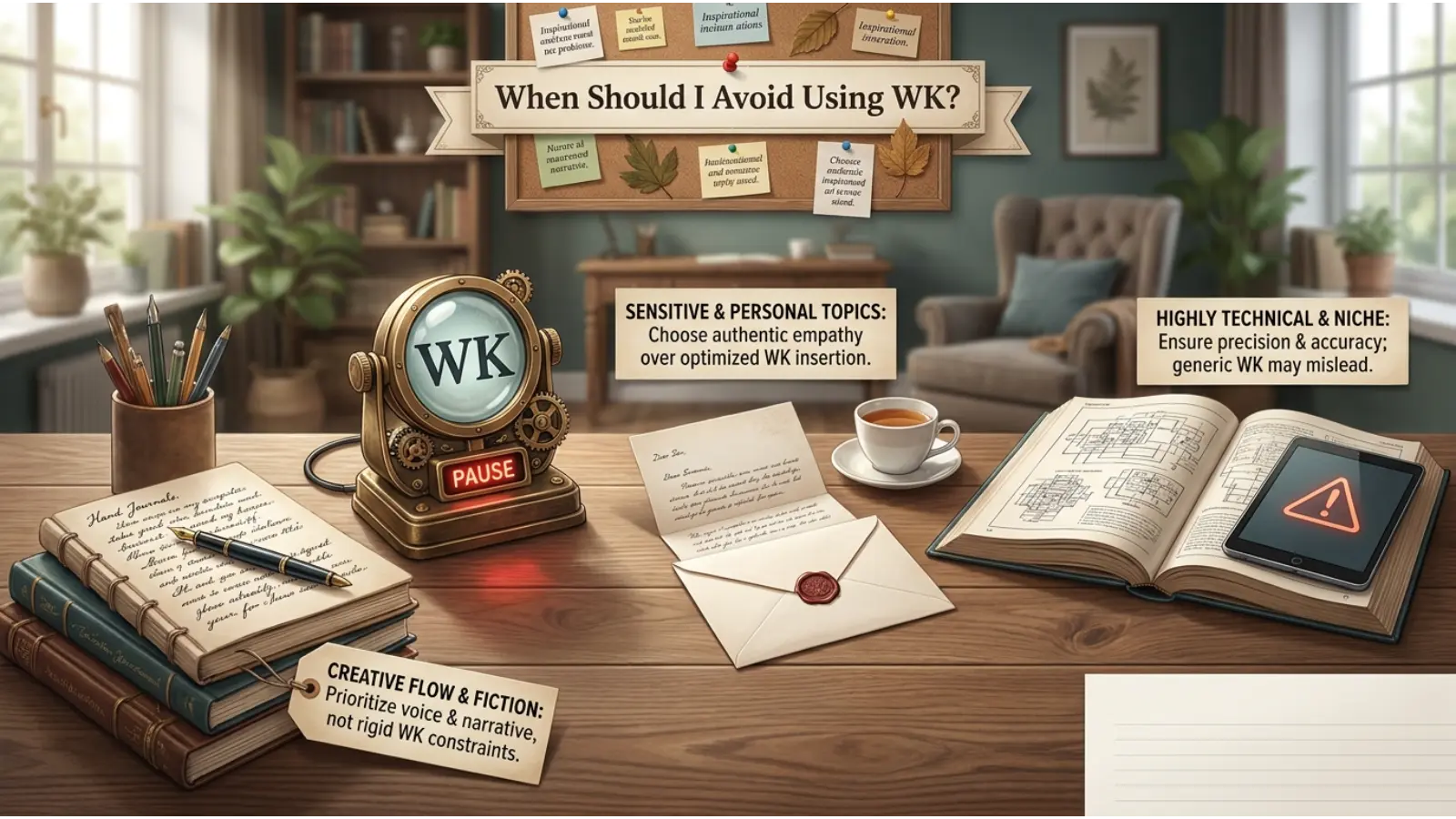
When Should I Avoid Using WK?
I avoid WK when I am writing something that needs a polished or professional appearance. A complete word usually creates less confusion and makes the message easier for every reader.
I recommend writing week in:
- Formal emails.
- Academic assignments.
- Business reports.
- Resumes and cover letters.
- Official documents.
- Professional presentations.
- Important instructions.
I find that writing the full word is usually the safer choice when the audience is unfamiliar with texting abbreviations.
WK Meaning In Different Contexts
| Other WK Meanings | Common meaning |
|---|---|
| WK meaning in chat | WK can mean week in informal texting, especially when people shorten words. It can also have context-specific meanings. |
| WK meaning Physics | In physics, wk is not one universal standard abbreviation. The meaning depends on the equation, textbook, or subject area. Wk may sometimes represent a quantity involving work or energy, but the surrounding notation is essential. |
| WK meaning on Instagram | On Instagram, WK can mean week, particularly in captions, comments, or messages. It may also be an abbreviation or initials depending on the post. |
| WK meaning on WhatsApp | Usually week when used as an informal shortening. For example, “See you next wk” means “See you next week.” |
| WK meaning on Snapchat | Usually week in casual Snapchat messages, although the meaning can change according to the conversation. |
| WK meaning in game | In gaming, WK can have different meanings depending on the game. It may refer to a character, ability, item, position, or gaming term, so the specific game matters. |
| WK WK meaning in chat | Repeating WK WK does not have one universal meaning. It may be playful repetition, a typo, or a context-specific abbreviation. |
| WK meaning calisthenics | In calisthenics, WK is not a universally standard exercise abbreviation. It may be shorthand used by a particular coach, program, or community, so the surrounding workout plan is needed. |
Common Mistakes I See With WK
I sometimes see people assume that WK must have the same meaning in every conversation. That approach can cause confusion because abbreviations can have different meanings across industries, communities, and platforms.
I also see unnecessary use of WK in formal writing. While most readers will understand it, I prefer the complete word when clarity and professionalism are important.
My simple rule is:
- Casual chat means WK can work.
- Formal writing means week is better.
- Unclear context means ask or clarify.
- Specialized context means check the surrounding terminology.
Frequently Asked Questions About WK Meaning in Text
What does WK mean in text?
I usually understand WK in text as a shortened form of week. The exact interpretation can depend on the conversation and context.
Is WK short for week?
Yes, I commonly use WK as an abbreviation for week in informal texting and quick written communication.
Is WK slang?
I would normally call WK an abbreviation rather than slang. It usually shortens the word week without creating a different meaning.
Can I use WK in a professional email?
I recommend writing week in a professional email. I find the complete word clearer and more polished, especially when communicating with clients, managers, or formal audiences.
Does WK meaning in text always mean week?
No, I would not assume that automatically. I check the surrounding conversation because WK can have different meanings in specialized or unusual contexts.
Final Thoughts
I see wk meaning in text as a simple example of how digital communication changes the way we write. In most everyday messages, I read WK as week, especially when the conversation involves schedules, plans, deadlines, or dates.
I always remind readers that context matters more than the abbreviation itself. I can use WK comfortably in casual texting, but I choose the full word week when I need my writing to sound formal, clear, and professional.

My name is Muhammad Waseem, author at WordzVibe.com. With a Master’s degree in English and over 6 years of linguistic experience, I break down modern digital terms, viral slang, and word meanings into simple language. Every definition on this site is personally researched, written, and verified by me to ensure full accuracy and reliability.
4 thoughts on “WK Meaning in Text: What Does WK Mean in Texting?”